
 3 years ago
2
3 years ago
2
ARTICLE AD BOX
Much of the world’s focus in 2022 was on the war between Russia and Ukraine, with the South African government’s stance making waves locally and abroad.
Russian President Vladimir Putin announced a “special military operation” in Ukraine in February, claiming the move was to “protect” the Donbas region of eastern Ukraine. He said there was a need to “demilitarise” the country. Ukraine labelled it an “act of war”.
As the conflict made global headlines, South Africans weighed in on any potential response from our government.
Some said South Africa would be affected by the war and had a duty to become involved. Others said we have our own problems and should not “stick our nose in other people’s business”.
GOVERNMENT’S RESPONSE
The government issued a statement saying it was “concerned about the ongoing tensions on the Ukraine and Russia border, a situation if allowed to further deteriorate could have regional and global ramifications”.
“South Africa urges all parties to devote increased efforts to diplomacy and to find a solution that will help de-escalate tensions and avert armed conflict. The world does not need another war as that will result in death and destruction, hence our call for enhanced diplomacy.”
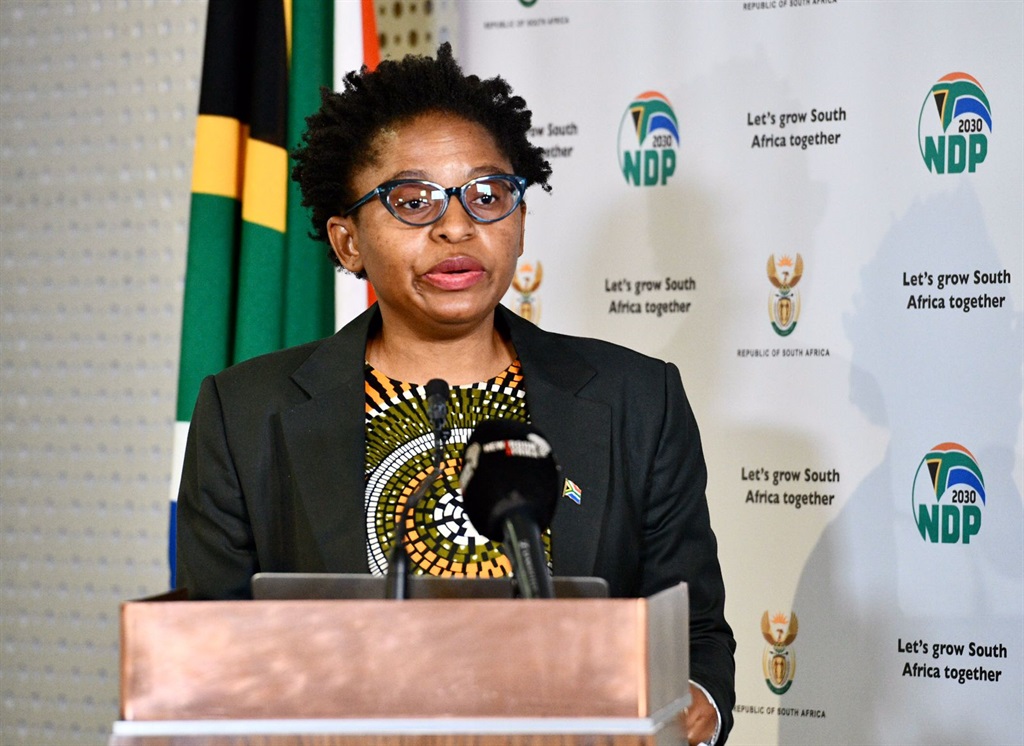
International relations and co-operation minister Naledi Pandor called for peaceful negotiations between Russia and Ukraine.
“All parties have much to gain from a negotiated outcome and much to lose from an unnecessary and violent conflict.
“The UN Security Council (UNSC) is the body given the mandate for maintenance of international peace and security and it must exercise its role fully. As South Africa, we believe all the issues of concern to any of the parties must be addressed in inclusive talks led by the UNSC,” she said.
SA REFUSES TO PICK SIDES
A few weeks later South Africa abstained from voting on a resolution in the UN General Assembly to reprimand Russia over the invasion.
The department of international relations and co-operation said the resolution had the potential to widen the divide and hostilities between Russia and Ukraine, and did not allow for dialogue and a peaceful resolution.
A month later, South Africa again abstained from a UN General Assembly vote that sought to suspend Russia from the UN Human Rights Council.
In a letter from ambassador Xolisa Mabhongo and addressed to President Cyril Ramaphosa, he said while the South African delegation remained concerned about the deadly situation unfolding, it did not believe kicking Russia out of the council was a wise decision.
DA COMES OUT IN DEFENCE OF UKRAINE
Political tensions brewed over South Africa’s stance, with Cape Town DA mayor Geordin Hill-Lewis pledging his city’s support and solidarity with the people of Kyiv, the capital of Ukraine.
In May, DA leader John Steenhuisen went on a “fact-finding mission” to Kyiv and claimed to speak for South Africa.
“If President Cyril Ramaphosa will not do this, and he has made it clear he will not, then it falls to me as the leader of the opposition and a party which governs for some 20-million South Africans.
“Why am I in Ukraine? Because the people of South Africa overwhelmingly stand with the people of Ukraine and are appalled by the violent invasion of Putin’s army. Someone has to speak for South Africa on this, and by being here and seeing for myself, I earn the authority and stage to do so,” said Steenhuisen.
PLEAS TO RAMAPHOSA AND A CALL WITH PUTIN
While many agreed with the DA’s stance, others brought up the ANC’s history and relationship with Soviet Russia as a reason for inaction and even “sympathy” towards Russia.
In April Ukrainian ambassador to South Africa Liubov Abravitova sent a passionate plea to Ramaphosa on Twitter to request a meeting with him and Pandor.
“I don’t only have no choice, I have no time. My people are dying, tortured, raped,” she told TimesLIVE.
In a tweet she wrote: “Since the beginning of the Russian invasion, I did not have any requested meeting with South African government officials. 45 days. My people are under brutal attack from Russians.”
The department of international relations and co-operation’s Clayson Monyela responded: “Ambassador, you know this is wrong and undiplomatic. You met Dirco diplomats on March 3. Head of Europe branch several times. President’s IR adviser. 4 DM Alvin Botes. We’ve long made a request for President Ramaphosa to speak to your president. You are not responding.”
A few weeks later Ramaphosa had calls with Ukrainian President Volodymyr Zelenskiy and Russia’s Putin.
In both meetings he stressed the need for mediation and negotiations for peace.
The Russian government said the call came at the request of Ramaphosa and included a conversation about the 30th anniversary of diplomatic relations between Russia and South Africa and expanding trade.
“The leaders reaffirmed their commitment to further develop the bilateral strategic partnership, noting, in particular, their readiness to expand trade, economic and humanitarian co-operation, and joint Covid-19 response efforts,” it said.
“At the request of President Ramaphosa, the president of Russia spoke about the reasons for and goals of the special military operation to protect Donbass.
“He also informed the South African leader about the situation regarding talks with representatives of the Ukrainian authorities. The president of South Africa supported the ongoing political and diplomatic efforts.
“Vladimir Putin and Cyril Ramaphosa agreed to continue their contacts,” the Kremlin said.
‘YOU NEVER FELT THAT WAR’
At around the same time, social development minister Lindiwe Zulu hit back at a perceived bias towards Russia, saying there were whispers that her stance on the conflict was influenced by the fact that she studied in Russia.
Speaking in parliament, Zulu confirmed she did study in Russia during apartheid, and defended the government’s stance. She said mediation and negotiation had won South Africans freedom and democracy.
“You don’t know that war. You’ve never felt that war. You’ve never lived in that war. All you know is to come and sit in this house and make noise about a war that you never felt nor experienced. We don’t Google the war. We lived it, we felt it, we know it,” she said.
Zulu said Russia had spoken about the expansion of Nato and asked those critical of the ANC’s stance on Russia to ask themselves why Nato was formed.
PANDOR TAKES ON WESTERN POWERS
Pandor drew praise from many in August after she met with US Secretary of State Antony Blinken and in a press briefing answered questions about South Africa’s foreign policy and perceived non-alignment with western powers.
She said she was glad Blinken had “confirmed America is not asking us to choose” and said South Africa “would not be bullied”.
“In some of our interactions with some of our partners in Europe and elsewhere, there has been a sense of patronising bullying to say ‘you choose this, or else’.
“It is important that we all accept our ability to hold different opinions. We are, after all, sovereign nations regarded as equal in terms of the UN Charter.
“We may differ in terms of economic power and economic ability to influence governments in different parts of the world, but what will make the world work is if we respect each other.
“I certainly will not be bullied that way, nor will I expect any other African country worth its salt to be treated that way.”
Pandor said South Africa’s trade with Russia amounts to less than $4bn (about R66.5bn) annually compared with $20bn (about R332bn) with the US, and any “fear that we exist under some push is a totally unfounded belief”.
She said South Africa had been clear in advocating for peace.
In September she complained that UN secretary-general António Guterres should have been involved in peace negotiations much earlier, and claimed he had been “totally marginalised” and “isn’t playing the role he should”.




 English (US)