
 3 years ago
3
ARTICLE AD BOX
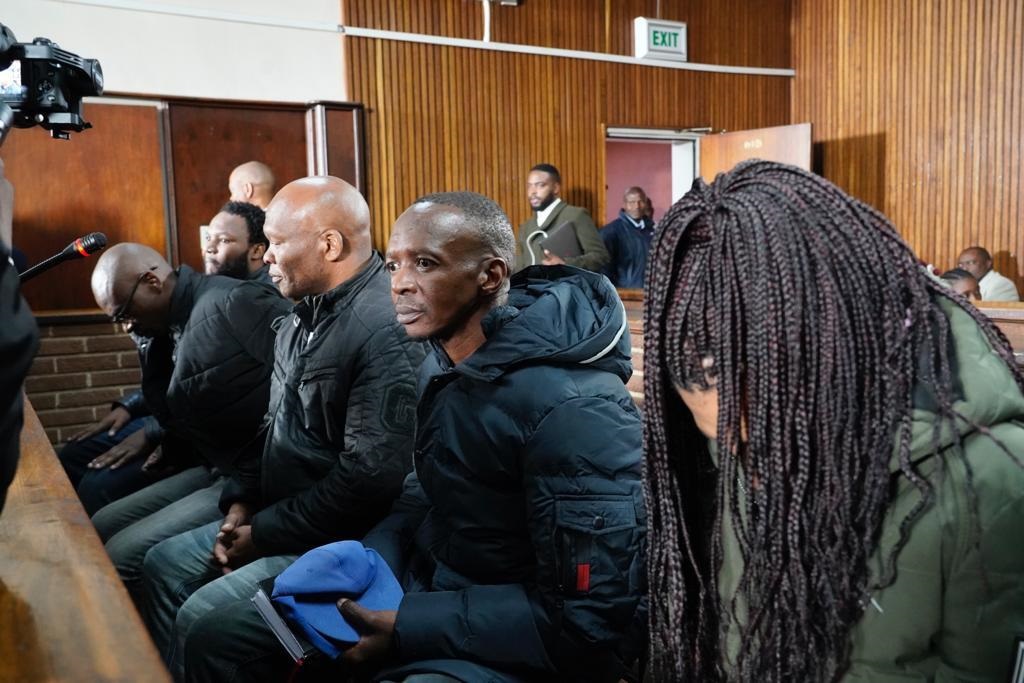
The true reflection of the society (so-called South Africa) has been displayed at Masselspoort to remind us that the struggle of our grandparents and comrades is not yet over.
What happened at Masselspoort was just one of the hundreds of acts of racism occurring throughout the country, without being captured by a camera lens!
This tells a lot about the frustration of the former oppressor when he is matched at his level eco-socially.
Again it has cleared the air about the mirage idea of a rainbow nation preached by Nelson Mandela.
The idea was a compromise. Africans have to pay for it with their dignity.
When tracking moments of history, one finds that there was an attempt by the Cape liberals of 1910 to implement the vision of a non-racial country on the basis of the right to vote.
But the idea failed as the Boer republics (Orange Free State and Transvaal) opposed it and in 1948 a political formation made in their image won the elections. The race decided the fate of Africans constitutionally and the rise of white power to its limit was realised.
It is clear from such events that racism gave minority European settlers an economic advantage over the African majority and determined their class psychologically, materially and otherwise.
If the political stance of Jan Smuts’s party paved the way for DF Malan’s party to the Union buildings 28 years after the unification of South Africa, one question comes to my mind.
It’s now 28 years after the first general elections. Will the party of Nelson Mandela make it to another 28 years after occupying the chairs of power at the Union buildings? Most political organisations in SA have founded their existence on the issue of race. The future is like a storage of atomic bombs while in dialogue for peace.
In 1994, following Codesa, the African National Congress won the elections and implemented the vision of non-racial South Africa. But this is proving to be the vision that has handicapped their economic policies especially those aimed at improving the eco-socio conditions of the African majority because they lack a radical nature.
One can hardly differentiate between the non-racial South African visions of Jan Smuts and Nelson Mandela as both were aimed at addressing the vote issue and nothing else.
The economic system was preserved in both instances! This is true based on the fact that, except for the majority of Africans being voters, their material conditions haven’t improved much. Unemployment and inequality are dominating their disadvantages.
Taking into account the current economic conditions, the majority of Africans have a cry to be heard when they say they were sold out at Codesa. High retail prices are still hitting hard on the lower layer of all classes which comprises the majority of the same previously excluded Africans.
The wealth of this country is attached to a particular race. That is an uncontested truth. Many economic policies of the past are still operational in workplaces especially privately owned, where whites still earn more than Africans.
This race owns means of production and corporate power. This tells a story that they don’t only feel powerful, they are powerful! This leaves Africans with only one alternative; to use their majority to drive the course of events to their advantage.
It’s a fact that this country was built on a racial basis and with the exclusion of Africans, and its legacies will hang around with us for longer than one can expect!
Racism is the greatest element of apartheid. Wherever it is, apartheid is living not resurrecting. Yes, it is not institutionalised today hence it is behaving like it did before 1948.
This means it has support and pillars that were not dealt with during the Codesa negotiations and after. Equality in standards of living can destroy several strong pillars of such, but the repositioning of land can end it all.
An African system of governance made in an African sense will sustain all gains and return true dignity to the indigenous people of the land.
Thembile Stokwe is a Sowetan reader


 English (US)