
 3 years ago
1
3 years ago
1
ARTICLE AD BOX
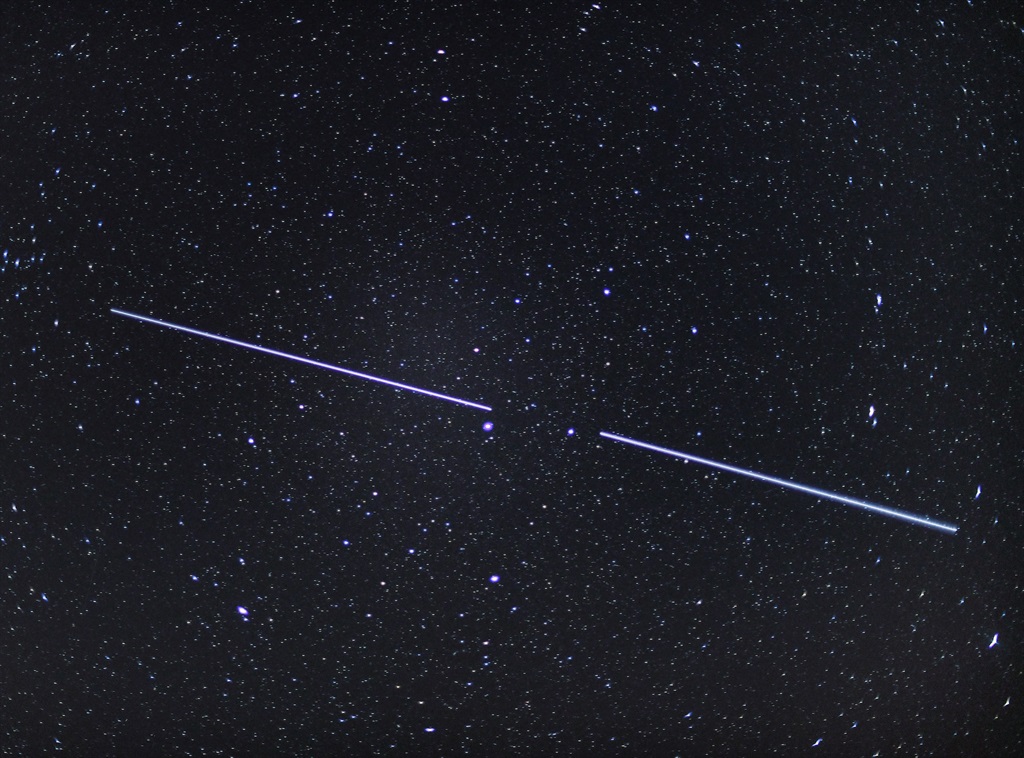
Two Starlink communication satellites can be seen as stripes of light in the night sky thanks to a long-exposure shot, above Germany, in January 2020 (Photo by Patrick Pleul/picture alliance via Getty Images)
- Amazon is looking for a Johannesburg-based regulatory manager who can deal with governments on satellite systems.
- It is working on Project Kuiper, which is due to start launching low Earth orbit satellites this year.
- The Amazon system is a little different from, but due to compete with, Elon Musk's growing Starlink constellation.
- Amazon has a longstanding operation in South Africa, but has only recently started expanding in preparation for launching its marketplace locally.
- For more stories, go to www.BusinessInsider.co.za.
Amazon is in the process of cutting 18,000 people from its workforce. But in South Africa it continues to hire people to work in its Kindle e-books division and to provide support, both local and remote, in its Amazon Web Services division.
And now it also wants help getting governments to sign off on its competitor to Elon Musk's Starlink system.
The company this week advertised for a Johannesburg-based manager with previous experience "securing licenses for the provision of satellite services" and, ideally, "working with high-level government officials".
That person, who will be formally titled "Manager, International Regulatory Affairs & Licensing", is due to work across Africa, and into the Middle East and Europe, on Project Kuiper, Amazon's not-yet-launched satellite internet system.
Amazon has been working on Project Kuiper satellites for years, and it is due to launch two prototypes soon. Eventually it plans to use three different private launch companies, including Amazon founder Jeff Bezos' more recent venture Blue Origin, to launch 3,236 satellites into low Earth orbit, at a cost of hundreds of billions of rands.
Those satellites will form a network capable of providing high-speed internet service pretty much anywhere on the planet – as long as governments allow Amazon the use of the radio frequency spectrum required.
Amazon has suggested the system will be used to provide internet access to individuals in underserved parts of the world.
At a high level, Kuiper is due to work much like Musk's Starlink, which already has several thousand satellites in orbit and has been credited with saving Ukraine when Russia invaded, and possibly changing the future of warfare.
Starlink, with its denser constellation of satellites, has not explicitly targeted poorer people or nations, but sells its services to airlines that want to offer in-flight connections to passengers. In countries where it is available to individual users, Starlink costs around R1,500 per month, after the once-off purchase of specialised hardware for around R10,000.
It is not entirely clear that Amazon has its heart set on a Project Kuiper regulatory manager in Johannesburg specifically; it has advertised the same job in London.
But even the possibility that such a key role could be based out of Johannesburg supports rumours among suppliers that Amazon's global cost-cutting will not hit plans for South African expansion.
Last year, news leaked of Project Fela, Amazon's plan to launch its marketplace in Nigeria and South Africa during 2023. Amazon has never confirmed those plans.
Informed but peripheral sources now say the launch in Nigeria may be postponed, but that the rollout in South Africa is still due to go ahead.
Amazon has not previously responded to questions about its hiring in South Africa, and did not immediately respond to questions about the Project Kuiper role.







 English (US)