
 3 years ago
1
3 years ago
1
ARTICLE AD BOX
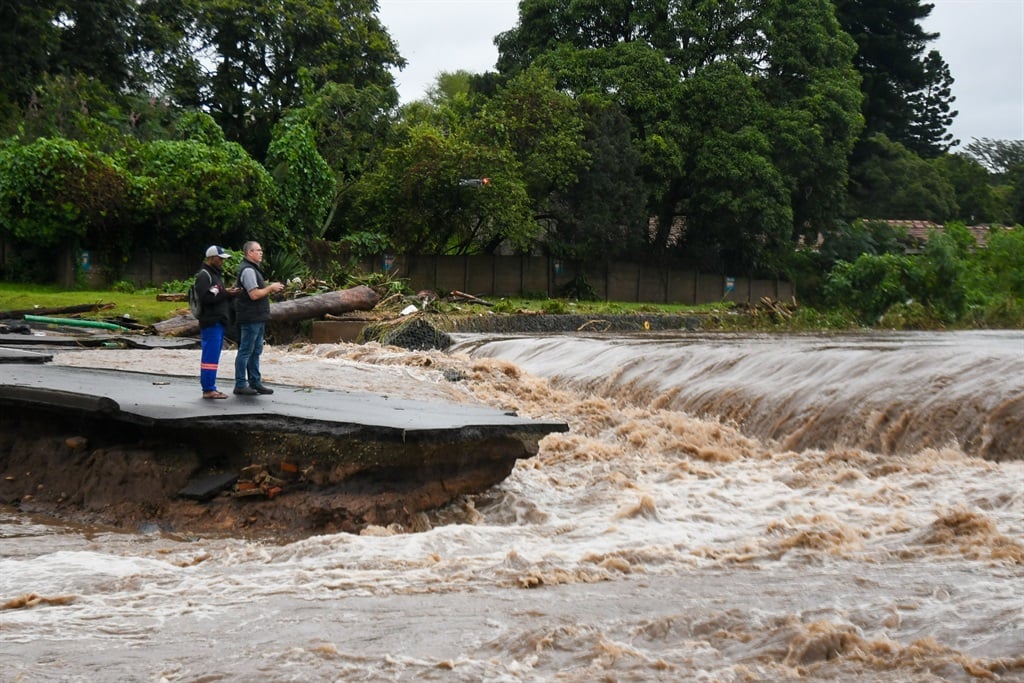
Heavy rainfall escalated into flooding in KwaZulu-Natal last year, but 2022 was still the fourth hottest year on record.
Gallo Images/Darren Stewart
- Despite above-normal rainfall, 2022 is South Africa's fourth hottest year on record.
- The hottest daily temperature of 41.7 ºC was recorded at the Upington climate station in December.
- With El Nino coming up, 2023 is set to be a warmer, and drier year.
- For climate change news and analysis, go to News24 Climate Future.
Despite above-normal levels of rainfall, 2022 is South Africa's fourth-hottest year on record, data from the South African Weather Service shows.
The SA Weather Service recently released its Annual State of the Climate 2022 report. It is based on data collected from 26 climate stations.
The annual average temperature was about 0.4ºC above the average for the reference period between 1991 and 2020, which made 2022 the "fourth hottest year on record since 1951," the report read.
The country generally experienced a warm year, amid higher levels of rainfall brought on by La Niña. La Niña is a weather event in the Pacific Ocean which impacts rainfall, and in southern Africa, it is associated with higher rainfall.
In South Africa, some areas experiencing drought decreased as a result of "good rains" in the early part of 2022. La Nina also meant more rain in summer rainfall regions like Johannesburg and KwaZulu-Natal.
"In February, rainfall in the densely populated Gauteng was often characterised by flash-flood events, displacing some communities and causing at least six casualties and extensive damage to infrastructure," the SA Weather Service report read.
It also noted the above-normal rainfall in April that escalated into flooding in Durban. More than 400 people died, and more than 40 000 people were displaced. The World Weather Attribution organisation had determined that climate change made extreme weather event double in frequency. It also intensified the rainfall between 4% and 8%.
"This event … is considered as one of the major damaging weather events of 2022," the SA Weather Service report read.
READ | Earth had its second-warmest March on record, EU climate monitor says
The SA Weather Service noted that some regions remained dry and hot, including some parts of the Eastern Cape, Northern Cape and Western Cape.
The report shows that the highest daily temperature recorded in 2022 was in Upington, at 41.7ºC, on 22 December. The annual average temperature for 2022 was 30.2ºC.
The lowest daily temperature recorded in 2022 was -6.4ºC at the Glen College weather station in Bloemfontein. The average temperature for the year was 8.1ºC.
In March, the International Research Institute (IRI) for Climate and Society at Columbia University indicated that the La Niña is winding down, with El Niño to follow later this year. El Niño is associated with increased temperatures and low rainfall, explained independent climatologist Dave Ogier. In South Africa, the day-zero drought in Cape Town a few years back resulted due to an intense El Niño, Ogier pointed out.
According to the IRI, the probability of El Niño is still low or neutral for April to June, at around 21%. But this increases to 49% for the months May to July. The probability increases significantly to between 60% and 67% from June to August.
Newsletter
Weekly
Climate Future Weekly
An overview of the challenges and opportunities of the climate crisis, as it changes the world we know.
"It's very likely going to be a drier year overall. The Western Cape might be close to normal rainfall as the El Niño wouldn't have strengthened fully by winter, but the summer rainfall areas may suffer from lower rainfall volumes and warmer temperatures as they historically have in the El Niño phases," Ogier said.
If El Niño lasts long or is severe, then there can be "serious" implications. For example, people could compete for water (in agriculture and industry) and limited water would drive up prices, Ogier suggested.
Ogier said to prepare, individuals should be more aware of water waste and leaks. They should water plants in the evening, shorten showers, use pool covers to limit evaporation and comply with water advisories.
Meanwhile data from EU climate monitor, Copernicus, shows that the world recorded its second-warmest March.








 English (US)