
 3 years ago
1
3 years ago
1
ARTICLE AD BOX
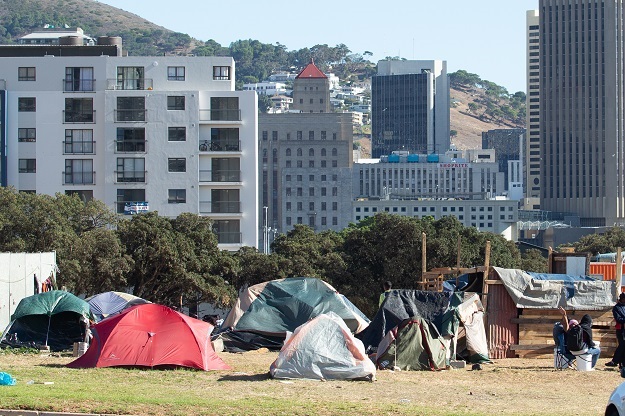
Makeshifts tents in District six which have now been taken down.
Gallo Images/Misha Jordaan
- The Western Cape High Court has granted the City of Cape Town an order to serve eviction notices at various unlawfully occupied areas in the metro.
- Cape Town Mayor Geordin Hill-Lewis said the City had done its "absolute level best" over the past year to extend every offer of care to each homeless person and to help them off the streets.
- Cape Town CBD has seen a sharp increase in homeless people sleeping rough.
The Western Cape High Court has granted the City of Cape Town’s application for eviction notices to be served at various unlawfully occupied areas in the city centre.
The City said the notices would be served before the next court hearing in April, where the court may grant a final eviction order.
Eviction notices are expected to be served at several unlawful occupation hotspots along Buitengracht Street, FW de Klerk Boulevard, Foregate Square, Taxi Rank and Foreshore, Helen Suzman Boulevard, Strand Street, Foreshore/N1, Virginia Avenue and Mill Street Bridge in the city.
The City said on Monday that while some homeless people accepted offers of support, unlawful occupants receiving notices had consistently refused all social assistance offers while occupying busy intersections and roads in the CBD unlawfully.
Cape Town Mayor Geordin Hill-Lewis said the City had done its "absolute level best" over the past year to extend every offer of care to each of the homeless people and to help them off the streets.
"Where this has been persistently refused, we must now ask the courts for the order we are seeking.
"No person has the right to reserve a public space as exclusively theirs while indefinitely refusing all offers of shelter and social assistance. Our city’s public places serve important social and community purposes and must be open and available for all," he said.
READ | R1bn war chest and power packs: Winde's plan to save Western Cape from load shedding
Hill-Lewis added that illegal occupations of the City's open spaces had an impact on traffic, and the safety of pedestrians and local businesses critical to growing the economy.
"Accepting social assistance to get off the streets is the best choice for dignity, health, and wellbeing. In Cape Town, we have responded to the national and global challenge of homelessness by expanding our care interventions to help people off the streets, with R77 million for safe spaces and social programmes this financial year.
"[The City of Cape Town] is the only metro dedicating a social development budget to this important issue," he stressed.
Over the last few years, the number of destitute residents has increased during the Covid-19 pandemic and the national lockdown. Cape Town CBD has specifically seen a sharp increase in homeless people sleeping rough.
Lobby group Ndifuna Ukwazi, which has represented the homeless in several court cases, said it was relieved that the City had accepted its constitutional duty not to evict unlawful occupiers of public land illegally.
Daniellé Louw, an attorney for the organisation, said the prevailing attitude by the City towards homelessness had been to address complaints from brick house residents rather than those in need themselves.
"The comments from the mayor on a voice note, which is circulating on WhatsApp, describe the refusal of people to enter shelters as a problem with individuals rather than the shelter system itself. The City cannot blame its citizens for the failure of its own system. It is the duty of the state to care for all who live in it - and not one it can throw its hands in the air and absolve itself from," Louw said.







 English (US)