
 3 years ago
3
3 years ago
3
ARTICLE AD BOX

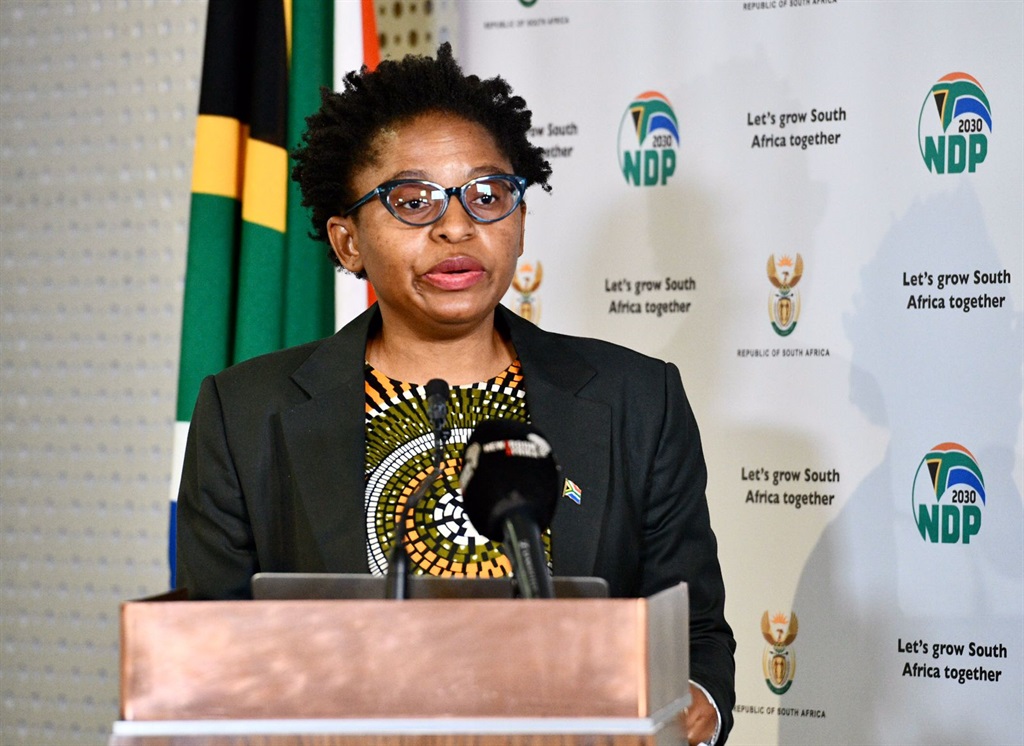
Masechaba Molete who was diagnosed with hypertension nine years back, had advised people to lead a healthy lifestyle. (Photo: Supplied)
- Hypertension is one of the most severe risk factors for death.
- It is responsible for almost 13% of all deaths globally.
- In SA, almost one in three adults live with high blood pressure.
It has been nine years since Masechaba Molete was diagnosed with hypertension, and her worst fear was getting a stroke.
As South Africans commemorated World Hypertension Day on Wednesday, Molete said the journey had been challenging and filled with up and downs.
The Department of Health urged South Africans to go for regular health screening, which includes hypertension or high blood pressure, which is referred to as a 'silent killer' because, in most cases, people may not show symptoms.
According to the department, hypertension is one of the most severe risk factors for death and is responsible for almost 13% of all deaths globally.
In South Africa, almost one in three adults lives with high blood pressure. It is responsible for one in every two strokes and two in every five heart attacks.
READ | A killer disease stalks Africa: Pulmonary hypertension
Molete, 40, was diagnosed with hypertension at the age of 31.
She's since put all her efforts into exercising, quitting smoking and alcohol, reducing salt intake, managing stress, and eating healthily.
"I visited my doctor for an unrelated reason and, when she did the standard blood pressure check, my numbers were so high, she told me she was surprised I hadn't had a stroke," she said.
Molete said she had no idea what was wrong because she had no symptoms.
She said her worst fear was having a stroke.
Molete said:
My aunt has hypertension and, a few years ago, she had a stroke. The resulting paralysis affected her face badly, and that sort of outcome terrified me.
She said that, at the time of the diagnosis, she worked from Monday to Sunday, in a deadline-driven job at an advertising agency, which left her feeling drained.
She and her colleagues drank alcohol daily after work and lived on junk food, soft drinks and cigarettes.
"My blood pressure readings have been mostly normal since starting my treatment. Achieving this has not been easy, and my journey has been filled with ups and downs," she said.
National Health spokesperson Foster Mohale said South Africa was the first country globally to develop comprehensive, mandatory legislation to reduce sodium levels across a wide range of processed food categories, which involved the cooperation of many food industry members.
READ | Our hearts are killing us in SA
"While the country's salt reduction approach has inspired the world, much more needs to be done to reduce salt intake and encourage the food industry to reduce the salt level in food," he said.
Meanwhile, a study by researchers in the Department of Global Health in the Faculty of Medicine and Health Sciences at Stellenbosch University revealed that non-communicable diseases, such as heart disease, cancer, chronic respiratory disease and diabetes, are the leading cause of premature deaths worldwide.
According to the report:
To address the risk factors for hypertension and diabetes in South Africa, policies and programmes (population-level interventions) must focus on the underlying socio-economic, environmental, behavioural or cultural conditions in which people live and work.
The study was recently published in the peer-reviewed journal, BMC Health Services Research.
It forms part of a larger project, Collaboration for Evidence-based Healthcare and Public Health in Africa, on population-level interventions to curb hypertension and diabetes in the country.
According to the researchers, key challenges for formulating supportive policies and programmes and enabling supportive environments included the lack of time, resources and funding, lack of stakeholder consultation, regulations and competing priorities and ineffective monitoring and evaluation.
The researchers say the decision-makers' perceptions show that collaborative planning and engagement, funding, reliable evaluation data and a careful assessment of the needs and circumstances of communities are essential to successfully plan and formulate policies and programmes to reduce the risk factors for hypertension and diabetes.
Want to discuss hotly debated topics with someone from across the world? Sign up for our global dialogue programme and get matched for a conversation






 English (US)