
 3 years ago
2
3 years ago
2
ARTICLE AD BOX
- A former drug user who was born on the streets of Durban during apartheid, recalls how her life transformed, thanks to the Denis Hurley Centre in Durban.
- The centre focuses primarily on supporting the homeless in Durban's inner-city.
- It has programmes focused on healthcare, homeless support, and skills development.
- GOOD NEWS DAY IS BACK! News24 celebrates the people restoring pride in our country. Read their stories here
She smiles and jokes with her colleagues at the Denis Hurley Centre, an interfaith-based charity organisation in the heart of Durban's sprawling CBD, as they prepare meals for the scores of homeless and needy people who queue for warm meals daily.
"I wasn't always this happy," 59-year-old Tracey Bolt tells News24 as she recalls the hardship she and her siblings had to endure during her youth.
The earliest childhood memory she has is of her family living under a bridge in the industrial suburb of Clairwood, in the south of Durban.
"I have three other siblings - two sisters and a brother. My mother raised the four of us on the streets," she says.
She adds:
I must have been around 7 or 8 years old when she left us. We were then taken to children's homes.
The mother of four was abandoned at an early stage of her life and her existence was filled with trauma - until she decided to turn her life around and live positively.
"My sisters were taken to St Monica's home in Durban. My brother and I were taken to a different institution," she recalls.
But she and her brother ran away.
"We went to a police station and explained that we had been abused at a children's home. I was then transferred to the School of Industry in Wellington, Cape Town," she says.
Bolt lived at the school until she turned 18. She had to leave even though she only attended school until Grade 7, having started late. Another family adopted her at that stage.
She says:
The family that adopted me turned me into their servant. I had to cook, clean and take care of their younger children.
"Feeling incredibly homesick and alone", she decided to return to Durban to search for her family.
"The first person I found was my cousin, who helped me search for my mother," she adds
After weeks of searching, they found her mother at King George Hospital (now King Dinizulu Hospital Complex) in Durban.
"I visited my mother in hospital and I asked her why she had abandoned us. She opened her mouth and tried to speak but couldn't say anything. She made hand gestures as if she was explaining something, but no words were coming out of her mouth," Bolt recalls.
Not long after, her mother died.
"She died without explaining why she failed to take care of us when we were small. I needed to know why she would sometimes leave us to fend for ourselves on the streets or sit in a corner and watch while she was drinking."
She adds:
Growing up on the streets made me anxious and easily scared. I still struggle to socialise with people.
Living under the Clairwood bridge was difficult, but it wasn't the end of her struggles.
Around the age of 21, Bolt conceived her first child - a son.
"When my son turned 2 years old, I was diagnosed with TB and had to be hospitalised," she says.
While in hospital, her boyfriend was murdered.
"I lived with him and his family," she adds.
"I [was discharged] from hospital around the time of the funeral. After he was buried, my boyfriend's mother kicked me out."
She adds:
She said I should go out and look for another man while she raised my child.
Bolt ended up back on the streets, where she became involved with the "wrong crowd" and started using drugs.
There she also became involved in romantic relationships that resulted in the birth of three more children.
"My first daughter's father was also murdered. My second daughter's father died of TB and my last-born son's father left. I have never seen him since 2008," she says.
The last three children were born on the streets of Durban.
Her life effectively resembled that of her mother - using drugs, consuming alcohol regularly, begging and seeing her children grow up without their fathers.
Her youngest son, now aged 22, also used drugs but stopped after she threatened to cut ties with him, she says.
Life begins to change
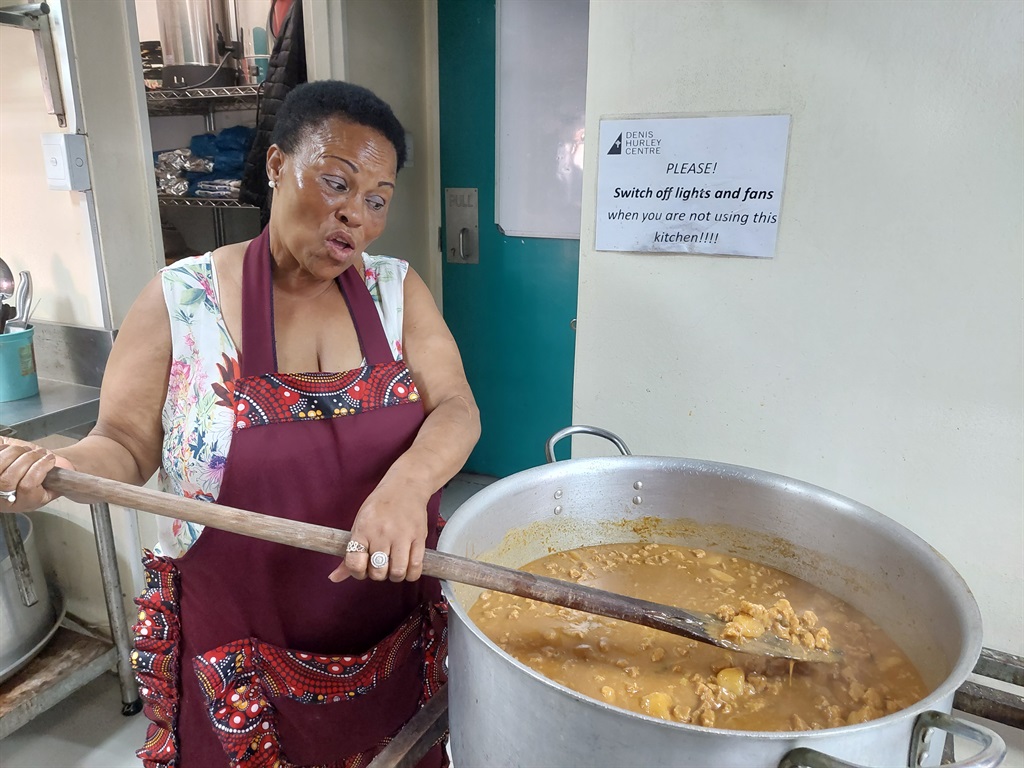
Tracey Bolt prepares a meal with a smile at the Denis Hurley Centre in Durban.
News24 Nkosikhona Duma
Around 2006, Bolt started frequenting the Emmanuel Cathedral (before the construction of the Denis Hurley Centre next to it) for the daily meals the cathedral was distributing to the homeless.
During this time, she started thinking about turning her life around. She didn't want her youngest to grow up the way she had.
"After the meals were served, I would hang around the cathedral and much to the irritation of volunteers, I would beg them to give me something to do," she says.
Eventually, a religious institution hired her to work in its kitchen for which she received a stipend.
"I was very excited. I managed to use that money to pay for a place at a shelter," says Bolt.
"Unfortunately, the shelter was turned into student accommodation and we were kicked out."
Currently, she lives with her son in Durban but wishes to find her own place one day.
"My life is not perfect right now. But I wake up every day and prepare food for the homeless. I cook with passion. I am much happier. I no longer use drugs. I work with people who have become my family. My children are all independent, and I have a good relationship with them," she adds.
The Denis Hurley Centre

Bulelo Sigabi, 48, is now a book seller at the Davenport Square in Durban after recieving training and support from the Denis Hurley Centre in Durban.
News24 Nkosikhona Duma
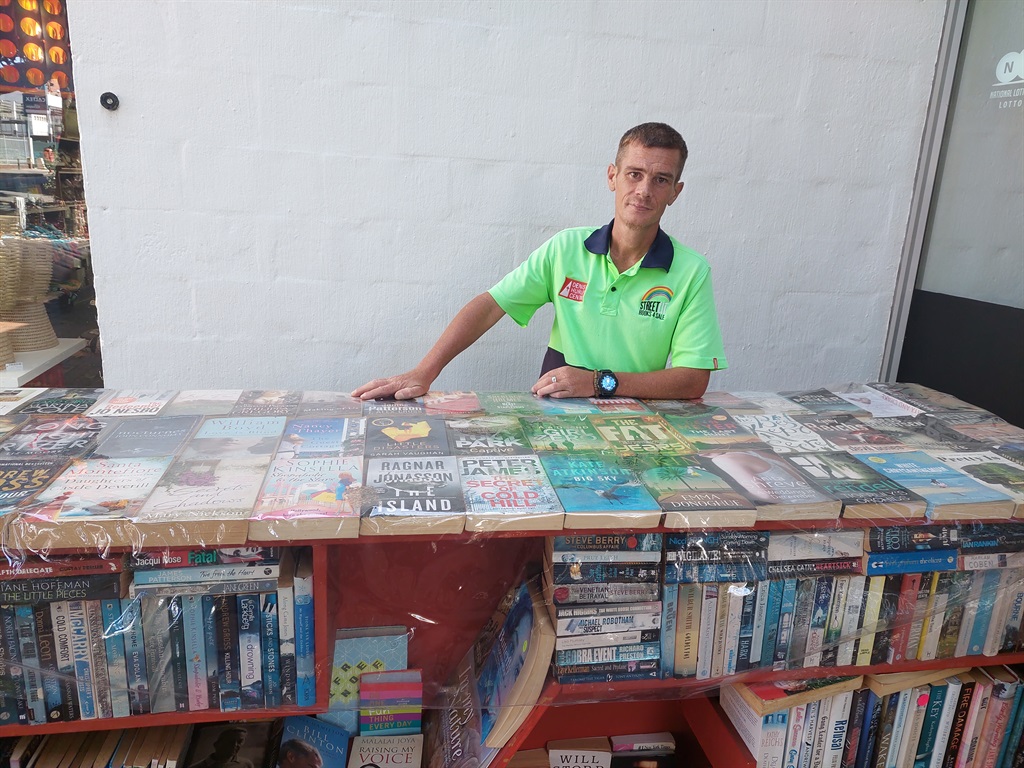
David van der Westhuizen, 43, is now a book seller at the KZNSA gallery in Durban after recieving training and support from the Denis Hurley Centre in Durban.
News24 Nkosikhona Duma
The Denis Hurley Centre was formally opened in 2015 but its history dates back to 1901 when the site it is located on was first bought for religious and humanitarian activities.
Bolt is among hundreds of people who have benefitted from her involvement with the centre.
Bulelo Sigabi, 48, an entrepreneur who lost his delivery business in 2020, also fell on hard times and became homeless during the Covid-19 pandemic.
A well-wisher introduced him to the centre and he was trained start a book retail business, before he was sponsored with a table, a chair and a first batch of books to sell.
His stall is situated at Davenport Square in Glenwood, Durban.
He is now able to pay for his daughter's pre-school and is trying to resuscitate a relationship that fell apart when he started experiencing financial woes in 2020, he tells News24.
David van Westhuizen, 43, a former prisoner who received similar assistance to what was provided to Sigabi, says his book stall is situated at the popular KZNSA gallery in Glenwood, Durban.
According to the centre's website, its focus is on "care, education and community".
The centre has several programmes focused on healthcare, homeless support, and skills development.




 English (US)