
 3 years ago
2
3 years ago
2
ARTICLE AD BOX

Medical technologist Candice Snyders preparing samples for analysis.
- Stellenbosch University has launched its state-of-the-art Biomedical Research Institute.
- Among the facilities is the only Biorepository Unit of its kind in the Southern Hemisphere.
- The facility will enable research into diseases such as TB and HIV.
A robotic arm, -80°C temperatures, and 3.5 million biomedical samples are just some of the features of a state-of-the-art bio-repository at the newly-launched Biomedical Research Institute (BMRI) at Stellenbosch University (SU).
The university launched the R1.2 billion biomedical research facility on Friday, saying the new building will place it at the forefront of biomedical sciences.
The Biomedical Research Institute (BMRI) houses some of the country’s top scientists, along with around 500 biomedical researchers and students. It also boasts the largest biosafety-level laboratory and a skills training lab with more than R120-million worth of equipment.
The fully-automated Biorepository Unit, the only one of its kind in the Southern Hemisphere, will allow the facility to store up to 3.5 million samples -80°C, in an automated biological storage system. This replaces chest freezers previously used, and conserves energy while ensuring sample integrity.
The unit makes use of a robotic arm to select samples based on a unique QR code, ensuring that only the sample that is required is moved and that samples remain at the correct temperatures throughout the selection process. The system is also upgradeable to store an additional three to five million samples, should Stellenbosch University outgrow it.
Scientists at the BMRI carry out research in a number of fields, including bioinformatics, tuberculosis, neuroscience, and urology.
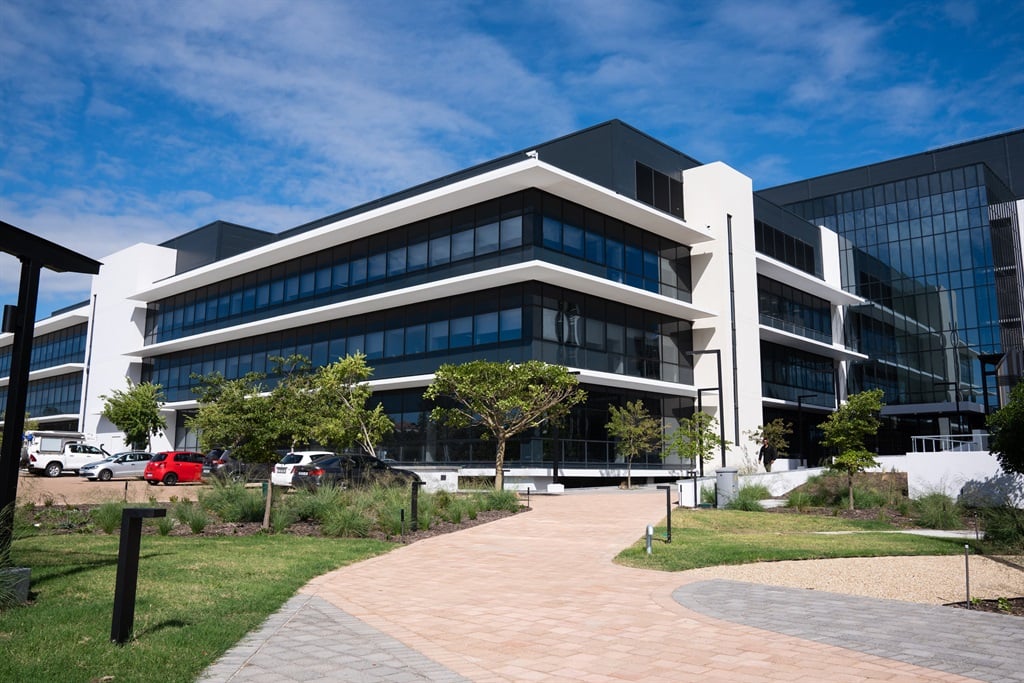
Stellenbosch University’s new Biomedical Research Institute is the most advanced research facility of its kind on the African continent.
The building is also home to the Centre for Epidemic Response and Innovation (CERI), selected by the World Health Organised as a partner-member of the first Covid-19 mRNA Vaccine Technology Transfer Hub. CERI is one of two specialised genomic facilities in Africa.
READ | UCT appoints Daya Reddy as interim VC for six months
"Scientists at the BMRI conduct research that translates into discoveries that help improve the diagnosis, prevention and treatment of illnesses affecting the people of South Africa and the rest of Africa," says Professor Nico Gey van Pittius, Vice Dean: Research and Internationalisation of SU's Faculty of Medicine and Health Sciences.
Van Pittius said on Friday that the building was a "10-year dream that’s come to fruition". The construction was carried out over four years amid disruptions due to the Covid-19 pandemic.
'Using breakthrough science to improve lives'
He added that the research focused on challenges on the continent, prioritising research into diseases such as TB and HIV.
"Our strategy is to really improve lives and address health concerns on the continent," he said.
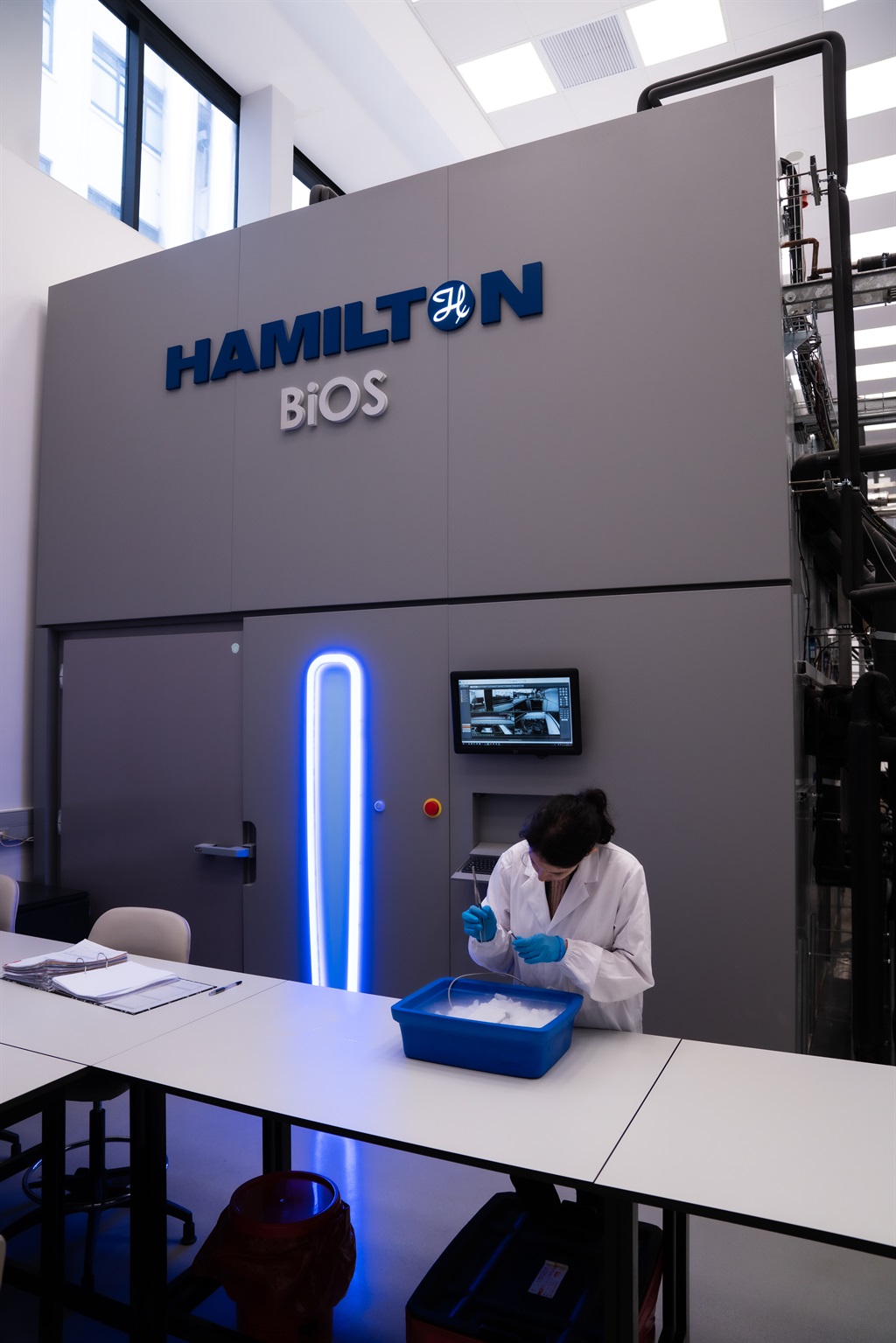
Technical officer Ané Kruger preparing samples to be stored in the Hamilton BiOS, the largest fully-automated biorepository on the African continent.
"During Covid-19, it became apparent that Africa has its own unique health challenges. We have needs that are not always addressed by outside countries. We bear the brunt of the global burden of disease, and we have a role to play in providing solutions to them."
The BMRI also houses numerous state-of-the-art laboratories, lecture and conference theatres equipped with the latest audio-visual technology, and large modern dissection halls which are custom-engineered to minimise formaldehyde exposure.
The BMRI was also awarded a 4-star rating from the Green Building Council of South Africa.
"The investment in the BMRI will allow significant human capacity development through training some of the best students from the continent and exposing them to extensive national and international research networks to results in a next generation of successful scientists," said Professor Elmi Muller, FMHS Dean.
"The BMRI will be a game changer for healthcare in Africa and is true evidence of using breakthrough science to improve lives."







 English (US)