
 3 years ago
2
3 years ago
2
ARTICLE AD BOX
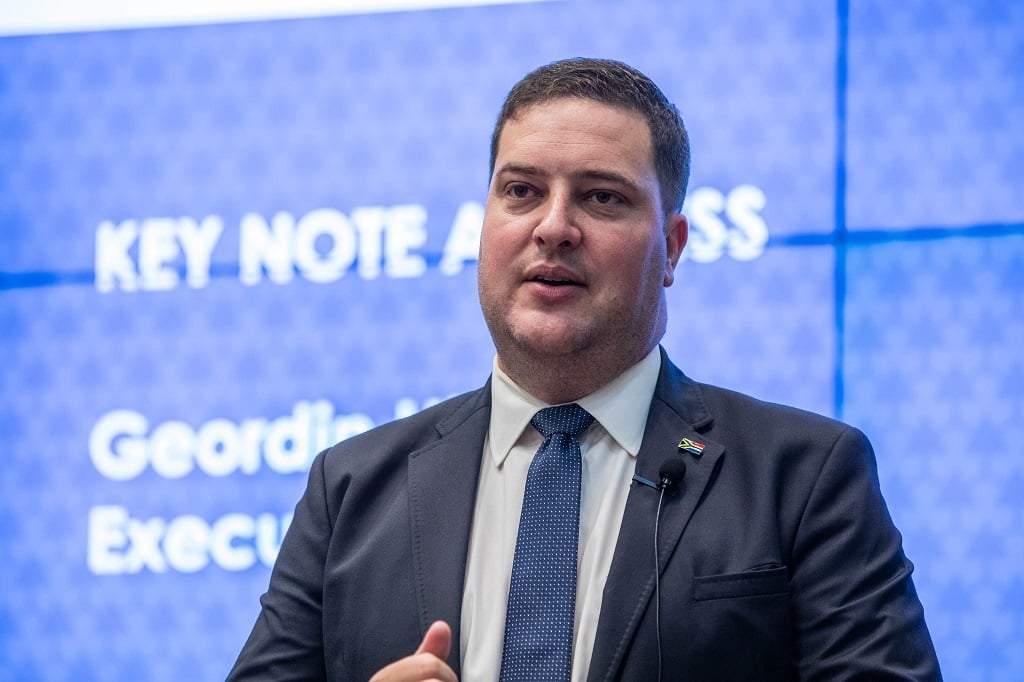
City of Cape Town Mayor Geordin Hill-Lewis.
- The City of Cape Town is proceeding with a new R1.2 billion solar PV and battery storage project to shield it from one stage of load shedding.
- The 60MW plant will be located just outside Somerset West and a site of 400 hectares has been identified for it.
- The project is one of two that were successful in acquiring technical assistance through the C40 Cities Finance Facility.
- For climate change news and analysis, go to News24 Climate Future.
The City of Cape Town has decided to pursue an R1.2 billion solar PV and battery storage project, which should shield it from one full stage of load shedding.
The Paardevlei Ground-mounted Solar Photovoltaic and Battery Energy Storage System Project is a 60MW renewable energy project that will be located just outside Somerset West on a site of 400 hectares, which is owned by the city.
Two years ago, the City of Cape Town applied to access technical assistance from the C40 Cities Finance Facility for its climate resilience projects. "More than 60 cities around the world applied, and Cape Town was the only city that was successfully awarded assistance for two projects," Cape Town Mayor Geordin Hill-Lewis said.
The solar PV and battery storage plant is one of the two projects that will benefit from technical assistance. This includes expertise required for specialist studies regarding environmental impacts, engineering design of the project, as well as the means to finance the project.
Shane Prins, manager at the city's Sustainable Energy Markets department, explained that the power project will cost R1.2 billion and the city does not necessarily have the "appetite" to provide all the capital. The city, however, is allocating R447 million from its R2.3 billion budget to end load shedding over three years, to this project.
Other possible funding options which will be assessed include private-public partnerships or having an Independent Power Producer develop the project and then have the city enter into a power-purchase agreement for the electricity, Prins said.
Newsletter
Weekly
Climate Future Weekly
An overview of the challenges and opportunities of the climate crisis, as it changes the world we know.
Staving off load shedding
"This project is another critical step in our journey away from Eskom reliance and towards a load-shedding-free Cape Town," said Hill-Lewis.
The city also recently launched a new tender to buy 500MW of electricity from independent producers, and it's also incentivising households and businesses to feed power back to the grid from their rooftop solar installations. The tariff approved by the National Energy Regulator of South Africa is 78.98c/kWh. The city's incentive (on top of the tariff) is 25c/kWh, following a recent increase of more than 10%.
READ | City of Cape Town to raise feed-in tariff for selling power back to the grid
The city has also allocated R1 billion for the maintenance and operation of the Steenbras pumped storage hydropower plant.
Cape Town has also recent launched the Liveable Urban Waterways Project, which will assist in rehabilitating and improving the management of waterways and catchment areas, using nature-based solutions.
"This project aims to develop a business case for investment in green infrastructure and nature-based solutions to improve the city's catchment and waterway management," Hill-Lewis said.
Two major catchment areas, Diep and Big and Little Lotus, will be targeted for improvements first.
The C40 Cities Finance Facility is also assisting with feasibility studies on what methods to use.
Andrew McDonald, professional officer at the city's Bulk Services department, said that the programme focused on green infrastructure is an important part of adaptation to climate impacts. "We can't engineer our way out of everything, so let's use natural, existing green infrastructure as an opportunity."
Green infrastructure, sustainable drainage and nature-based options hold many benefits for the city and its residents, including the ecological health of our catchments, promoting better groundwater recharge, and improving the condition of our river corridors and public open spaces. Not to mention the opportunities that will open up in the green economy.
- Geordin Hill-Lewis
The C40 is a global network of mayors of the world's leading cities working to respond to the climate crisis, and its finance facility is funded by the UK, the German Federal Ministry for Economic Cooperation and Development and France's Agence Française de Development.
Cape Town, Johannesburg, Tshwane and eThekwini are among the South African cities that are part of the C40 network.
Tanya Werheit, Consul-General of Germany, noted the importance of the projects in addressing the climate crisis and aiding the country's efforts to meet climate commitments under the Paris Agreement.




 English (US)