
 3 years ago
2
3 years ago
2
ARTICLE AD BOX
Most South Africans are oblivious to Parliament as a democratic institution and the immense weight it holds in a constitutional democracy like our own. The Thabo Bester debacle changed that, writes Ryan Smith.
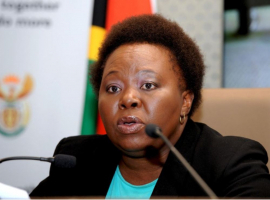
It has been just over a week since Democratic Alliance Member of Parliament and former state prosecutor, Glynnis Breytenbach, ripped to pieces private international security company, G4S, in Parliament's Justice Portfolio Committee for the Hollywood-esque escape of convicted criminal and Facebook rapist Thabo Bester.
The story gripped the nation and publicly displayed the mortal danger in which corruption can place South African citizens. It proved that beyond just the theft of taxpayer money via organised white-collar crime, corruption could manipulate the very systems meant to protect us.
It proved that with enough money and influence, a South African fugitive at large could be a high-flying resident of Hyde Park, impervious to the law and the order with which we task it to safeguard our society.
But the Thabo Bester story yielded, perhaps, an unexpected nugget of service to South Africa's democracy.
Relentless probing
As the sordid saga both entranced and horrified the nation, so Glynnis Breytenbach's relentless probing of the company that oversaw and seemingly enabled Bester's escape provided an opportunity for South Africans to witness something very few of us have ever seen – accountability. And not the kind published in commissions of inquiry and softened by the diplomatic speak of judges past, the kind of real talk that expresses the pent-up rage and frustration that fills so many of us in a country devoid of consequence.
I watched in awe as the South African public rose to meet and cheer Breytenbach's questioning of G4S operatives, her many years of detailed interrogation and cross-examination on full display. Having worked with Breytenbach, I know that she has a no-nonsense approach to all things in life, but most importantly, she is not a lawyer or politician who speaks in parables. And it was precisely the kind of straight talk with which she grilled G4S that South Africans loved.
Twitter soon became awash with hashtags and memes of Breytenbach's interrogation. TikTok was abuzz with videos garnering hundreds of thousands of views. And I even heard people using the term 'to be Breytenbached' to mean being royally and embarrassingly caught out.
READ | SATURDAY PROFILE: Glynnis Breytenbach - 'I say it how I see it and if you don’t like it, too bad'
It was a fascinating phenomenon to witness as someone working in politics and Parliament.
In our world, we watch and speak about Parliamentary committees all the time, even though most citizens consider Parliament to be a right bore. South Africans paid slightly more attention to the annual State of the Nation Address with the advent of the EFF only because the party ushered in the kind of theatrics that one laughs at hesitantly. But most South Africans are still oblivious to Parliament as a democratic institution and the immense weight it holds in a constitutional democracy like our own.
The Thabo Bester debacle changed that.
For as South Africans found a sense of communal national catharsis in Glynnis Breytenbach's questioning, so many realised what Parliament could, and should be – a place where our dissatisfaction and anger as citizens must be channelled, and where those who do us a national disservice, can truly face the music.
It was perhaps this public discovery that made Breytenbach such a hit.
Many South Africans were realising the value of Parliament and seeing a part of themselves reflected in the national legislature for the very first time. This is pivotal. Up until now, I don't think South Africans have seen Parliament’s full flex.
A defanged Parliament
Very few of us even believe that Parliament has any power, and we can’t be blamed if we look at how Parliament has been defanged since the Zuma presidency under the ANC. But more importantly, it reminded me how few South Africans understand the workings of our democratic machinery.
It was a true delight, in the wake of Breytenbach's G4S questioning, to see so many South Africans get excited about their democracy and about the power they held to ensure that their voices were represented on a national platform.
When asked, most South Africans would state that the biggest threat to our progress as a nation is corruption, but I would disagree. Corruption is inevitable. It is human nature to be contorted by power and influence and to act with a sense of impunity as a result. But if we are to live in a democracy, corruption is not our biggest stumbling block – it is merely a facet of power in society, regardless of the political system we choose.
If South Africa is to exist as a constitutional democracy, then our enemy is not corruption but a lack of political literacy and civic education. We shouldn't be asking ourselves whether or not our government will be corrupt; we should be asking ourselves how we can stop rewarding and entrenching it.
READ | Ruth Hopkins: Mangaung prison - What does accountability look like?
I think this is why the G4S enquiry, and Glynnis Breytenbach's role in it, so enraptured the nation. It held up a mirror to South African democracy and allowed us all to look at ourselves for the first time in a very long while.
But what are political literacy and civic education? Well, to put it simply, it is part of democracy's instruction manual. Before any of us go to the ballot box to cast our vote, we need to determine that we know the answers to the following questions:
What is the difference between a General and Local Government Election? What is the make -up of councils, provincial legislatures, and the national assembly? What are the spheres of government, and which part of government is responsible for the services around me? What is a by-election?
Some more recent and topical questions would include the following:
Why has this coalition government fallen? Which party has led to its collapse and why? Is this party serving me or its own interests? What does this party stand for, and is this reflected in the party's actions? All of these questions should be answered by South Africa's public education curriculum and taught as crucial life skills. The fact many of them aren't, is telling.
American statesman John Adams, once said:
Liberty cannot be preserved without a general knowledge among the people, who have a right… and a desire to know.
We need to start asking ourselves as South Africans, what we need to know, and perhaps what we are afraid of knowing, before we participate in democracy. Much like a marriage, democracy takes work. And it is the work of willing participants that keeps democracy alive. If we don't work to protect it, democracy falls apart.
So why is Glynnis Breytenbach and the G4S appearance before Parliament's Justice Committee so important? Because the emotion with which South Africans connected to this sitting, and the outcomes it produced, are a stark reminder of the power we as the people still wield over our government. And instead of allowing this power to wane, we need to bolster it. Democracy and accountability only work when its participants make informed decisions. How do we inform ourselves you might ask? By paying attention to what happens in democracy’s arena – Parliament.
Many people ask me why the DA bangs on about parliamentary ad-hoc committees, joint sittings, and the importance of questions to Ministers and Presidents. The answer can be found in the G4S appearance before the Justice Committee. Parliament informs citizens in a democracy. It creates the legal platform upon which we live our lives, it forces public representatives to keep their word, and by means of our instruction manual for democracy, gives us all the information we need to take decisions for our own future. Our cathartic response to Glynnis Breytenbach in Parliament proved this.
Newsletter
Weekly
Opinions Weekly
Opinions editor Vanessa Banton curates the best opinions and analysis of the week to give you a broader view on daily news happenings.
Breytenbach's grilling of G4S showed South Africa what Parliament, and democracy could, and should be. But it is up to us to find the courage to put in the work to protect it, to enact it, and to safeguard it. Now, more than ever, South Africans need to ensure that Parliament is rebuilt and that it gets working.
If South Africans loved Glynnis Breytenbach's grilling of G4S, then you’ll love a Parliament in full working condition. For as much as Parliament can be a stage for rousing entertainment, it remains first and foremost, our only arena for democratic combat. Without it, we lose our democracy altogether.
- Ryan Smith is Chief of Staff to the Federal Leader of the Democratic Alliance.
*Want to respond to the columnist? Send your letter or article to opinions@news24.com with your name and town or province. You are welcome to also send a profile picture. We encourage a diversity of voices and views in our readers' submissions and reserve the right not to publish any and all submissions received.
Disclaimer: News24 encourages freedom of speech and the expression of diverse views. The views of columnists published on News24 are therefore their own and do not necessarily represent the views of News24.




 English (US)