
 3 years ago
1
3 years ago
1
ARTICLE AD BOX
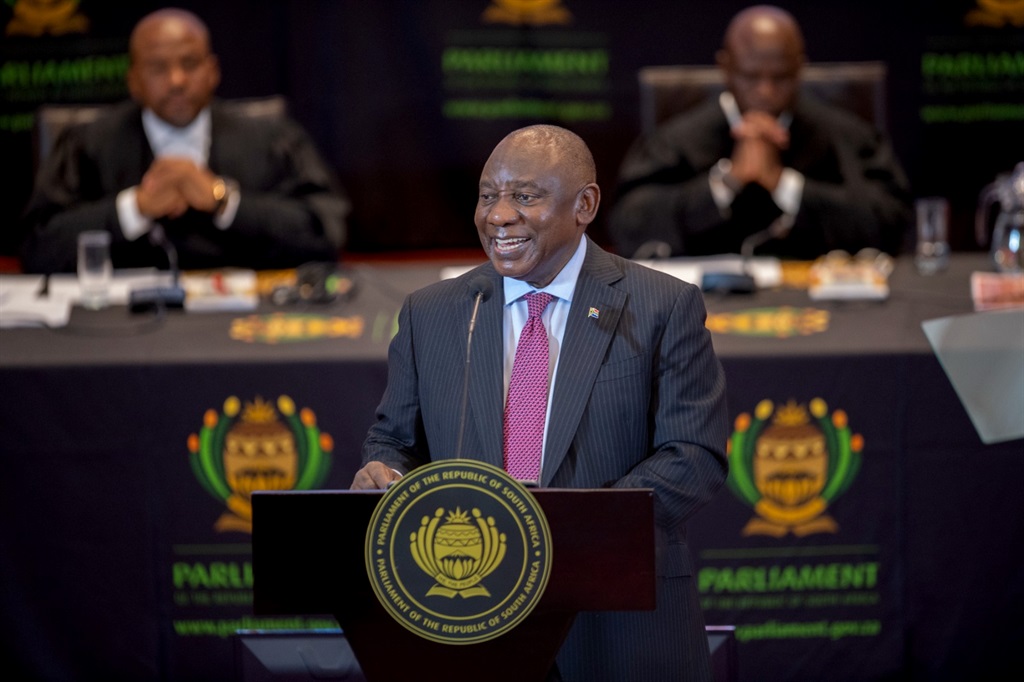
President Cyril Ramaphosa responds to his SONA debate. PHOTO: Jaco Marais
- President Cyril Ramaphosa says the state of disaster imposed as a result of load shedding will be used to overcome bureaucratic obstacles.
- According to Ramaphosa, all efforts should be made to urgently add new generation capacity to the national grid.
- On Thursday, Ramaphosa responded to the debate on his State of the Nation Address (SONA).
The state of disaster imposed as a result of load shedding will be used to cut unnecessary bureaucratic obstacles standing in the way of urgently adding new generation capacity to the national grid.
This is according to President Cyril Ramaphosa who on Thursday defended his decision to implement the state of disaster, during his reply to the debate on his State of the Nation Address (SONA).
“We will use it to ensure continuity in the provision of critical services and supply chains, and to address the impact of load shedding on businesses and households,” Ramaphosa told MPs.
READ | Why the DA is going to court after it called for a 'ring-fenced state of disaster on Eskom'
Over the last two days, opposition parties criticised Ramaphosa's address, with the nation's energy crisis featuring prominently.
“Several speakers in this debate have argued that the national state of disaster is unnecessary, or that it will allow for abuse of the system. This includes some leaders in the opposition – such as the premier of the Western Cape [Alan Winde] – who as recently as last month were writing me letters and holding media briefings calling for a state of disaster to be declared,” Ramaphosa said.
Furthermore, Ramaphosa said DA MP Cilliers Brink called the Disaster Management Act “a dangerous weapon in the hands of incompetent ministers”.
We will use the state of disaster to get rid of unnecessary bureaucratic obstacles that stand in the way of urgently bringing new generation capacity onto the grid.https://t.co/LjhTdb9d6u
— Cyril Ramaphosa ???? (@CyrilRamaphosa) February 16, 2023“This is the same Disaster Management Act that made possible our decisive, effective and agile response to successive waves of Covid-19 infections. It was this act that empowered us during that pandemic to save many lives and prevent even greater hardship. It is this Disaster Management Act that has on numerous occasions enabled us to provide urgent relief and support to people affected by floods and other natural disasters,” he said.
Ramaphosa said with the state of disaster, environmental protections and technical standards would be maintained.
Procurement would also be undertaken with transparency and proper oversight, he assured MPs.
“As we build an electricity system that will meet our energy requirements into the future, we need to dispel some of the myths that have been circulating – and that have been repeated here – about the path we are taking.
READ | Ramaphosa’s ‘minister of electricity’ a clear sign of the backdoor battle for soul of Eskom – Malema
"We need to dispel this idea that we are abandoning coal as a fuel source. We should all remember that coal-fired power stations provide 80% of our energy source and will therefore continue to provide the bulk of our ‘base load’ supply into the future,” he said.
Regarding the new ministry of electricity, Ramaphosa said this minister would assume full responsibility for overseeing all aspects of the electricity crisis response.
“The minister will be responsible for driving the various actions being coordinated by the National Energy Crisis Committee to end load shedding as a matter of urgency. The reality is that the resolution of the energy crisis requires effective coordination across several departments and public entities,” he said.
The president said the energy crisis required "undivided attention of a political principal who does not need to split time and energies among different important responsibilities".
He added that it was not accurate that the minister of electricity would clash with other ministers who have been responsible for energy.
Ramaphosa said:
Some have suggested that the appointment of the minister will cause confusion and fragmentation, and that it might also result in turf wars amongst the ministers who deal with energy and Eskom.
"This is not the case. The minister of electricity will be focused day in and day out only on addressing the load shedding crisis, working together with the management of Eskom and the board. The minister will be leading the National Energy Crisis Committee and interacting with all other departments in the spirit of cooperative governance."




 English (US)