
 3 years ago
2
3 years ago
2
ARTICLE AD BOX
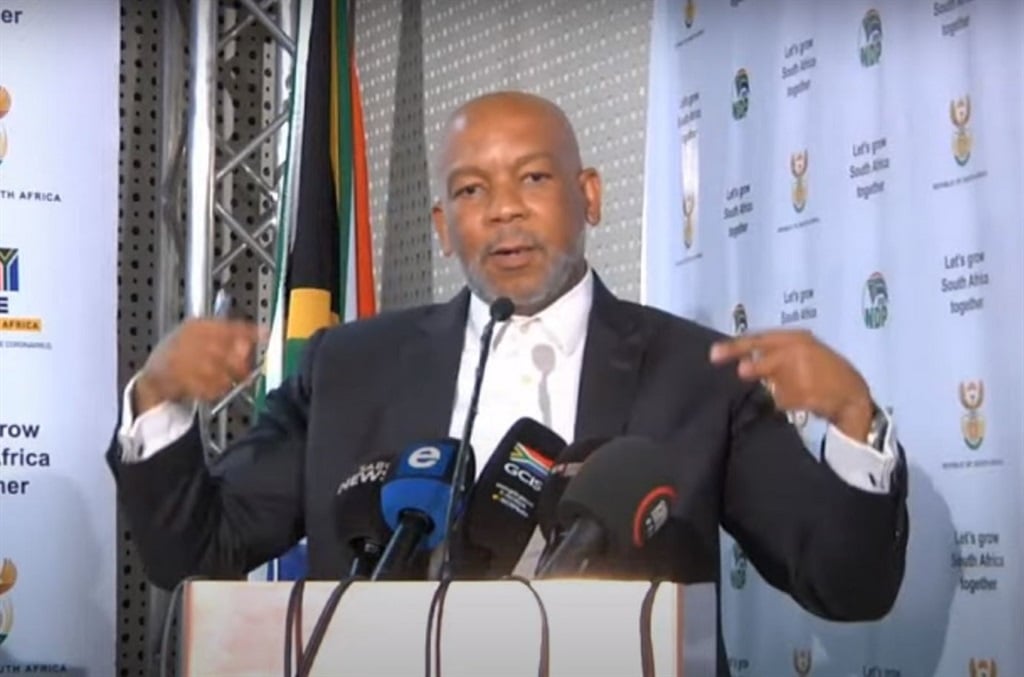
Minister of Electricity Dr Kgosientsho Ramokgopa briefs the media about the end of the state of disaster on the energy crisis.
- Electricity Minister Kgosientsho Ramokgopa says the energy transition will happen, but with a secure supply of electricity.
- The minister reiterated the country's commitment to reduce emissions, while ensuring a sustainable economy.
- He told members of Parliament that modelling would be done to determine the implications of delaying the decommissioning of coal on climate commitments and costs.
- For climate change news and analysis, go to News24 Climate Future.
South Africa remains committed to its goals to reduce emissions, but the transition to a low-carbon economy must happen with a secure supply of electricity, says Electricity Minister Kgosientsho Ramokgopa.
The minister was answering questions in Parliament's National Council of Provinces on Tuesday afternoon.
He was asked about the country's plans to decommission coal-fired power plants. News24 previously reported that the minister had proposed that the decommissioning of some old coal-fired power stations be delayed amid the energy crisis.
Ramokgopa reiterated previous statements that a decision to delay the decommissioning of coal-fired power stations – which are responsible for the bulk of the country's greenhouse gas emissions – is not a deviation from the country's climate commitments. In particular, the country has committed to limit annual carbon emissions to a range between 350 and 420 megatonnes by 2030.
"These are voluntary national commitments we set ourselves to decarbonise the economy and move to a fossil [fuel]-free economy," said Ramokgopa, adding:
We are committed to achieve a net-zero path and agree to be net-zero economy by 2050.
Ramokgopa previously told journalists it is possible to meet climate goals and extend the life of coal-fired power stations. He said that the revised schedules to decommission coal would be in line with the timelines for climate commitments.
READ | SA may hit climate goals without closing coal stations - thanks to load shedding, poor plant output
In briefing members of Parliament, he raised concerns over higher stages of load shedding that are impacting the South African economy. Ramokgopa explained that there are concerns that the pace at which coal-fired power stations are decommissioned would be faster than at which new generation capacity can be added.
Between 2018 and 2020, South Africa decommissioned a collective 2 900MW of coal-fired units. Between 2023 to 2027, this should be another 5 200MW. Collectively this is equivalent to 8 100MW or more than eight stages of load shedding.
Considering the speed at which renewable energy projects can be added to the grid – history shows it takes about 18 months from when requests for proposals for new bid windows are announced to the point projects reach financial close. It then takes another 24 months (at most) for these projects to be built.
"So in total, the cycle takes 42 months or 3.5 years for you to complete that process," Ramokgopa said. It will take about five to eight years to build the additional grid capacity to connect these projects.
Based on these timelines, a procurement round launched tomorrow would eventually see electrons feed into the grid by 2029. All this, bearing in mind that 5 200MW are to be removed by 2027.
"The point we are making [is], you can't transition in the dark. The lights must be on. The economy must be sustainable as we decarbonise," he said.
Newsletter
Weekly
Climate Future Weekly
An overview of the challenges and opportunities of the climate crisis, as it changes the world we know.
Based on the current schedule, three units of Camden have to be closed by July. One unit is 140MW so the country will be losing 420MW this year.
"What we know the country can ill-afford to remove those megawatts. We need them to sustain this economy," said Ramokgopa. He said this position was explained to the banks, as well as the international members of the Just Energy Transition Partnership – the UK, US, Germany, France and the EU. He said there is a great level of "appreciation" for what South Africa is doing. "This is a step to protect the energy sovereignty of the country as well as the interests of the economy and the people of South Africa."
Ramokgopa said that in rethinking the decommissioning schedule, modelling will be done to understand the implications of emissions and climate commitments and the costs. This is a similar point Forestry, Fisheries and Environment Barbara Creecy raised when she answered questions in Parliament last week.





 English (US)