
 3 years ago
1
3 years ago
1
ARTICLE AD BOX
- Bark stripping is leading to mass tree die-off in parts of Table Mountain National Park, particularly Newlands Forest.
- Gaps in the canopy are now increasing the risk of runaway fires, while allowing invasive plant species to take over.
- As the most sought-after bark becomes rarer in the forest, harvesters are now targeting trees in suburban areas.
The intense bark stripping of indigenous trees in Table Mountain National Park (TMNP) increases the risk of runaway fires and opens forests up to overwhelming invasive growth, say conservation groups.
Bark stripping isn't new.
The practice of peeling bark from indigenous trees to craft traditional medicines has been done for generations, historically, in a sustainable manner.
WATCH | Tree-killing beetles spread to Cape Town's lush southern suburbs
"We're observing syndicates operating in this area [of Newlands Forest]. Harvesters now come in and take as much bark as possible, ringbarking the trees and causing them to die," Willem Boshoff, co-founder of the Newlands Forest Conservation Group, tells News24.
His organisation focuses on preserving indigenous forests on the eastern slopes of Table Mountain.
"Since 2019 and the onset of the Covid-19 pandemic, we've seen an exponential increase in bark stripping where often, in a [single] night, between 10 and 20 trees will be bark stripped."
He says this practice has a visible impact on the forest, to the point where sections collapse.
Increased risk of runaway fires
These bark-stripped trees, most commonly the Cape Beech and the protected assegai, inevitably destroy surrounding trees when they collapse.
This depletes the forest canopy, allowing more sunlight to reach the ground, drying out vegetation and increasing the risk of fast-moving fires, which already plague Table Mountain during Cape Town's hot and windy summer months.
"The gap in the canopy also creates space for invasive species to gain a foothold and invasive species, by nature of being invasive, outcompete indigenous species. All this is a toxic cocktail that will eventually result in the permanent destruction of the Afromontane Forest if not stopped," explains Boshoff.
Efforts are being made to combat the rampant stripping of trees, but with a vast area to oversee – some 221 square kilometres – and a lack of human resources, SANParks is struggling to stem the illicit flow of bark from TMNP.

Fresh bark stripping in Newlands Forest.
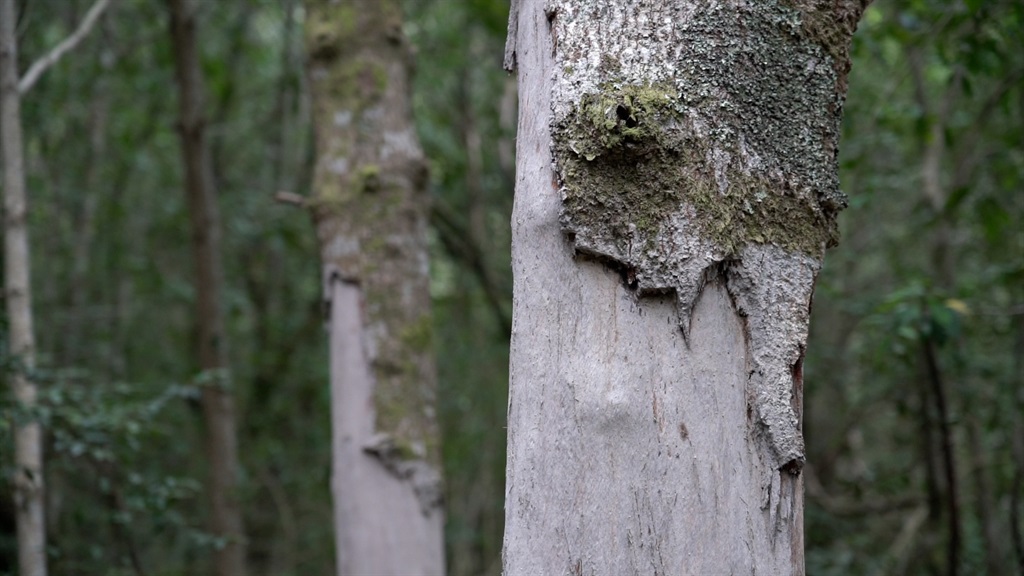
A tree in Newlands Forest that has been stripped of bark and painted with a special paste to help with regrowth.
News24 Luke Daniel
"Due to market demand, bark stripping incidents have increased not only in the park, but also on greenbelts within the city and also on private property," SANParks tells News24, adding that 45 affected trees had been identified over the past year in Newlands Forest alone.
During that time, five suspects were caught.
In February 2021, three suspects were arrested in the Rhodes Memorial area for possessing stripped bark and chopping tools.
One of them pleaded guilty to bark stripping and was sentenced to six months imprisonment or a fine of R3 000 with a three-year suspended sentence.
Later that year, in October, two more suspects were arrested for possessing stripped bark in a national park, with both pleading guilty.
Spreading to suburbs
"Bark stripping is an issue up in the mountain as well, but it isn't only really there. It's [also happening along] Claremont main road, which is a highly urban area, it's happening here [in Newlands], it's Kenilworth, it's Durbanville," Mikhail Manuel, councillor of Ward 59 in Cape Town's southern suburbs, tells News24.
"Certainly, in the last year, it's become a lot more prevalent, to the extent where the City of Cape Town is considering creating a bark stripping bylaw or adding an addition to the tree keeping bylaw."
Stressing the importance of civic organisations in combating bark stripping, Manuel is on a mission to raise funds to empower community-led initiatives.
The councillor aims to raise R21 000 by running the Two Oceans Half Marathon in April. This money will go to TreeKeepers Cape Town, a local environmental conservation organisation, and be spent on wrapping trees already damaged by bark stripping and protecting others with paint.
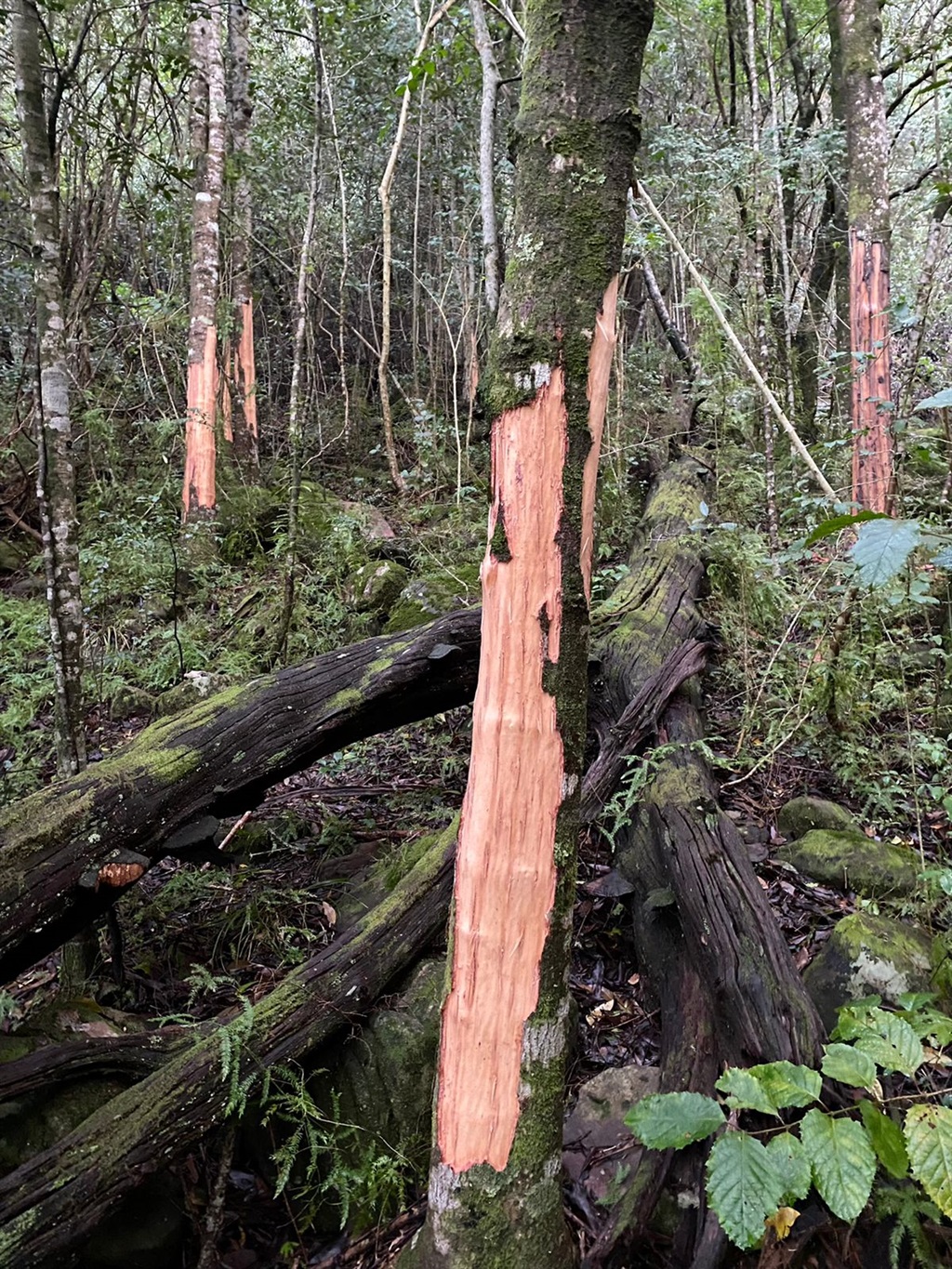
Fresh bark stripping in Newlands Forest.
Supplied Willem Boshoff
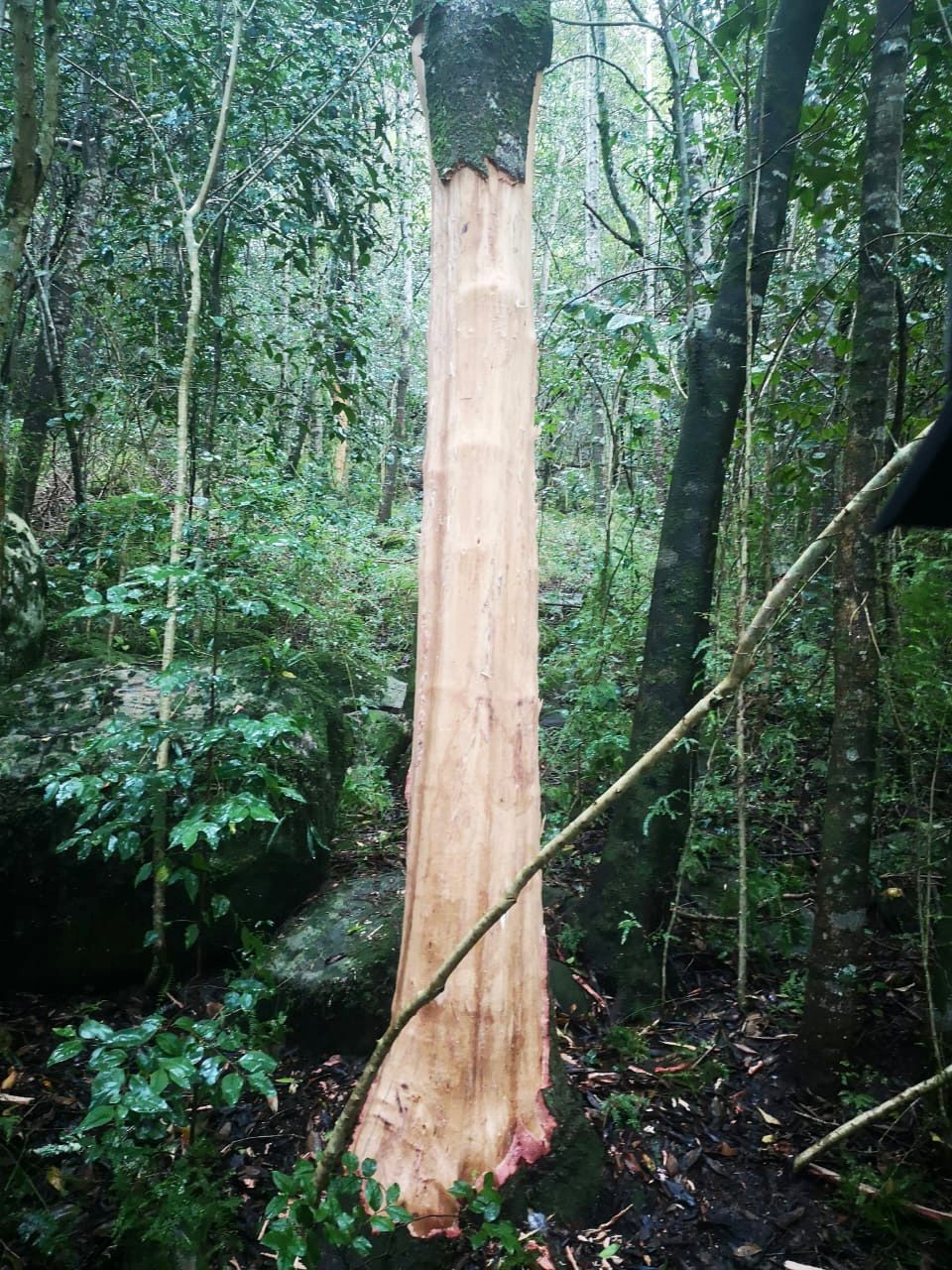
Fresh bark stripping in Newlands Forest.
Supplied Willem Boshoff
SANParks awareness campaign
To save some of the affected trees, SANParks is implementing reactive measures.
"Stripped trees are painted with a special paste which protects the tree from infection and assists recovery."
In August 2022, SANParks, in partnership with the Newlands Forest Conservation Group, unveiled bark stripping awareness signage at Newlands Forest.
These signs aim to "educate and make the public aware of the bark stripping issues occurring in the Newlands Forest and where they can report the incidents".








 English (US)