
 3 years ago
1
3 years ago
1
ARTICLE AD BOX
South African Post Office (Sapo) CEO Nomkhita Mona has said the entity has “no choice” but to implement mass job cuts.
She said that although the number is no longer as high as 6,000 jobs, the state-owned must reduce its workforce.
During an interview with 702, Mona said Sapo is currently looking at terminating around 3,000 employee contracts as part of its efforts to cut costs.
“We are in terrible shape as the Post Office, and we do have to take some drastic actions, which I might add, these should have been taken ten, maybe even 15 years ago,” she said.
“The time has now arrived. We don’t have any choice.”
Mona explained that employee salaries make up 68% of its expenditure and that at the time of its turnaround strategy formulation in 2021, it had 15,600 employees in its workforce.
“[This is] completely unsustainable,” she said.
“During that process of the strategy formulation, we then calculated that we would need to lose 6,000 jobs.”
The Sapo CEO said management spoke to Post Office employees and offered a retrenchment package of one week’s pay for every year they worked to those willing to leave voluntarily — the minimum required by South African law.
“So we’ve managed to have 1,724 people take up that voluntary severance package,” Mona stated.
She added that some employees left through natural attrition, including retirement and resignation, bringing its current workforce to 12,513.
She said this means Sapo will still need to cut around 3,000 jobs.
Sapo’s financial situation is dire, with liabilities outweighing its assets by R4 billion and debt of R8 billion. It has also approached the South African government for a R3.4 billion bailout.
However, Mona said there are still “bright prospects” for the Post Office.
“I am here now, so I have to take responsibility,” Mona said.
Referring to the company’s dire financial situation, Mona explained that it didn’t develop overnight but over years of mismanagement.
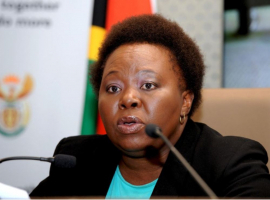
 Nomkhita Mona, Group CEO of the South African Post Office
“In my experience, no organisation collapses overnight,” she said.
“We can see what needs to be done. It is going to be a long haul. It is going to be difficult. It’s going to require money and funding.”
“We are not at a point where we say, ‘even if we fix this, then what?’. There are bright prospects for the Post Office, and we can see how we can get to them,” Mona added.
Sapo’s downfall
According to a statement from the Post Office, the company last posted a profit in 2004, and the decline in its financial position began as far back as 17 years ago.
“The economic recession in 2008 and adoption of smartphones accelerated the decline,” it said.
However, Sapo said a protracted strike in 2014 was “the straw that broke the camel’s back”, with bulk business customers having to find alternative service providers.
“The Post Office ended the strike by terminating the agreement with Labour Brokers and absorbing 8250 part-time workers into SAPO, despite the fact that there were no full-time jobs for them,” Sapo said.
It also highlighted that some of the previous contracts Sapo signed were detrimental to its performance.
“While the principle of Sapo distributing social grants is the correct one, the Sassa contract was not in the interests of Sapo,” the Post Office said.
“Security costs related to the Sassa contract alone amount to roughly R600 million per annum.”
It added that the long queues that resulted from Sassa grants impacted Sapo’s other services, forcing customers to find alternative service providers.
The Post Office also highlighted other factors that contributed to its dire financial situation, including:
- The government not using Sapo’s services
- Courier companies allowing their services for parcels under 1kg (any parcel up to 1kg is by law reserved for Sapo) — this controversial issue is currently in dispute
- Post-Retirement Medical Aid (PRMA) benefit liabilities for those still in the system.
Sapo said it had covered PRMA benefits to the value of R1.3 billion over the past 11 years.




 English (US)